6
modules covering the full emotional and social skillset
31
discrete skills, behaviors, and perspectives taught
3+
complete passes through the curriculum across school years
13
validated psychometric scales measure outcomes
The six modules

Each module is a coherent set of skills, not a list of topics.

Children learn through worksheets, short lectures, role-plays, pair activities, group activities, and structured dialogues. Two of the six modules are being prepared for academic peer review.

01
Controlling Your Own Emotions
The foundation for everything else.
Preparing for peer review
Before a child can build a relationship, set a goal, or stand up to a bully, they need to know what they're feeling and have at least one tool for managing it. This module teaches the inner work: recognizing emotions as they arise, sitting with discomfort, and choosing a response instead of reacting on impulse. Children use emoji-based worksheets to track their feelings across the week, practice calming techniques through guided activities, and work through "anger meters" and "sadness meters" that help them name what they're feeling before it escalates.
What children learn
  • Understanding emotions
  • Managing emotions
  • Understanding anger and how to manage it
  • Sadness and how to manage it
  • Fear and how to manage it
  • Jealousy and insecurity
  • Psychological flexibility
02
Building Relationships
The skills no one explicitly teaches.
Preparing for peer review
Most children learn social skills by trial and error. We teach them the same way you'd teach reading: explicit instruction, lots of practice, and feedback. This module breaks down the verbal and non-verbal mechanics of human connection. In one activity, children practice active listening in pairs, learning specific verbal cues ("that's interesting," "I understand") and non-verbal cues (nodding, eye contact, smiling) through structured role-plays. In another, they pass compliments around a circle, first about possessions, then about personal qualities, building the habit of noticing good things about the people around them.
What children learn
  • Social skills (baseline & advanced)
  • Communication skills (baseline & advanced)
  • Non-verbal: smiling, nodding, tone, distance
  • Non-verbal: posture, fidgeting, interjection
  • Fostering community
  • Combating social isolation
03
General Happiness
The daily practices that sustain wellbeing.
Drafted
Happiness, for most adults, isn't something they fall into. It's something they practice. This module teaches children the daily perspectives and habits that the research consistently links to flourishing: gratitude, optimism, acceptance, and the ability to let go of things they can't control.
What children learn
  • Appreciation and gratitude
  • Acceptance of yourself and your situation
  • Acceptance of others
  • Optimistic thinking
  • Psychological flexibility
04
Getting What You Want
Healthy assertion, without aggression.
In development
Children who can't ask for what they need either go without or take it. Both are bad outcomes. In one role-play, a student practices responding to "Give me your money!" with a firm "No!" and to "Do my homework!" with "No, you can do it yourself." These are small moments, but they build the muscle memory for real situations. This module teaches the legitimate, non-aggressive ways people navigate the world: saying no to a request, persuading someone of a viewpoint, setting and pursuing a personal goal, and persisting when the path is hard.
What children learn
  • Assertive skills training (learning to say "no")
  • Assertive skills training (with others)
  • Persuasion
  • Goal setting
  • Resilience
  • Conquering fear
05
Creating Your Identity
Who do you want to be?
In development
A child with a clear sense of their own values has an internal compass that helps them through pressure, conflict, and uncertainty. Children learn what responsibility looks like in practice: what belongs to them, what doesn't, and how to accept, negotiate, or decline a responsibility. They work through real scenarios where they have to identify the consequences of not following through, and practice telling others when they can't take something on.
What children learn
  • Values
  • Responsibility
  • Personal accountability
  • Self-acceptance
06
How to Be Part of a Team
The skills for everything that comes after school.
In development
Almost every meaningful thing an adult does happens in a group: a workplace, a marriage, a community. This final module teaches the skills of cooperation. Children work in small groups where each member must write and present their own contribution independently, learning that teamwork means everyone carries their share. They practice greeting group members, letting everyone have their say, and the specific skill of politely declining someone's idea while proposing an alternative.
What children learn
  • Cooperation and compromise
  • Conflict resolution
  • Teamwork
  • Leadership
  • The value of teaching those younger
How children actually learn

A three-phase model: conceptualize, apply, master.

A skill heard in a single lesson is forgotten by the next week. Our delivery model mirrors how children build any complex skill (language, music, sport) through repetition, application, and gradually deepening complexity.

Phase 01

Conceptualization

Short instruction and worksheets introduce a skill: what it is, why it matters, when to use it. The goal is understanding, not yet performance.

Phase 02

Application

Role-plays, pair work, group activities, and structured dialogues let children try the skill in low-stakes settings, with real-time feedback from teachers and peers.

Phase 03

Mastery

Longitudinal practice across three or more years, with the same skills revisited at deeper levels, moves the behavior from conscious effort to automatic habit.

Measurement

Every child, pre- and post-assessed with validated instruments.

If we want governments and school systems to eventually adopt this curriculum, we need data that meets the bar of academic publication. We've designed the measurement protocol from the start with that standard in mind.

Thirteen standardized scales

We use a battery of internationally validated instruments measuring social-emotional health, resilience, school belonging, mindful awareness, life hopefulness, self-esteem, wellbeing, and loneliness. Two are already available in Urdu; the remaining eleven are part of our Pakistan translation work.

  • SEHS-P / SEHS-S (covitality) Urdu pending
  • CYRM-R (resilience) Urdu pending
  • SCWBS (wellbeing) Urdu ready
  • WEMWBS (mental wellbeing) Urdu pending
  • RSES (self-esteem) Urdu ready
  • PSSM / PSSM-P (school belonging) Urdu pending
  • CAMM (mindful awareness) Urdu pending
  • CHS (children's hope) Urdu pending
  • ULS-8 (loneliness) Urdu pending

A protocol designed for real classrooms

Assessments fit within standard 45-minute class periods. For ages 8–12 instructors read items aloud; ages 13+ self-administer. Sessions are spaced 1–2 days apart to reduce cognitive fatigue.

Every administration includes brief grounding at the start, a debrief at the end, and a tiered distress response (green/yellow/red) that routes any serious concerns through the school's existing counseling pathway.

We are currently reaching out to English-medium schools in Pakistan for our initial deployment. Because these schools teach in English, our existing English-language scales can be used immediately, no translation required. Once we complete Urdu translation and validation, we will expand to Urdu-medium schools across all four provinces.

Children encounter the full assessment battery at least twice, before they begin the curriculum and after each cycle of exposure, allowing us to track skill development across multiple years.

Cross-cultural design

Built to work in Boston and Karachi.

The skills the curriculum teaches (naming an emotion, repairing a friendship, asking for what you need) are universal. The way they're taught, the examples used, and the language of instruction must be adapted for the children sitting in the classroom.

Our Pakistan strategy is deliberate: we're starting with English-medium schools, where our scales work as-is, while simultaneously translating and validating our assessment instruments into Urdu with partners like PILL and the University of Punjab. Once the Urdu scales are validated, we expand to Urdu-medium schools, reaching the majority of Pakistani students.

Future deployments will follow the same model: local academic partners, locally hired teachers, locally adapted materials, the same underlying curriculum.

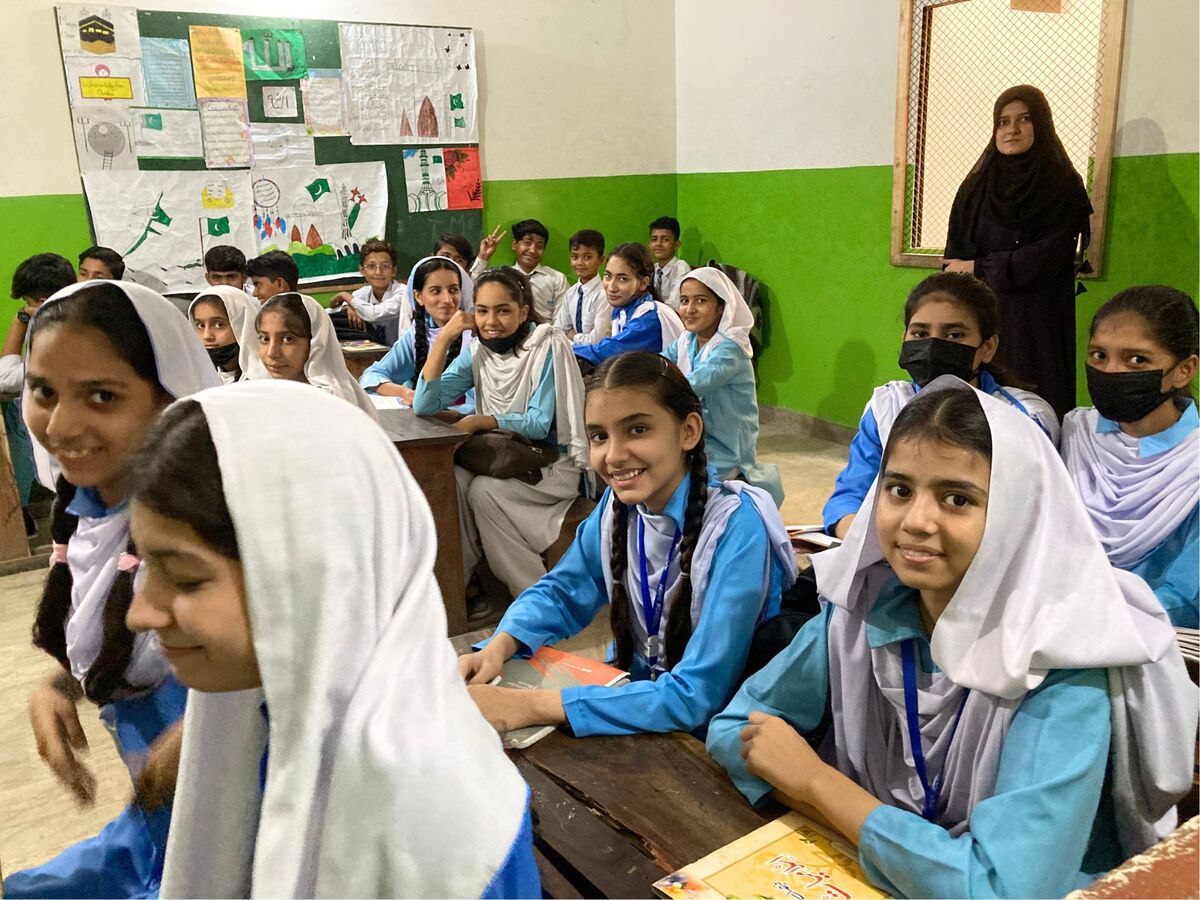
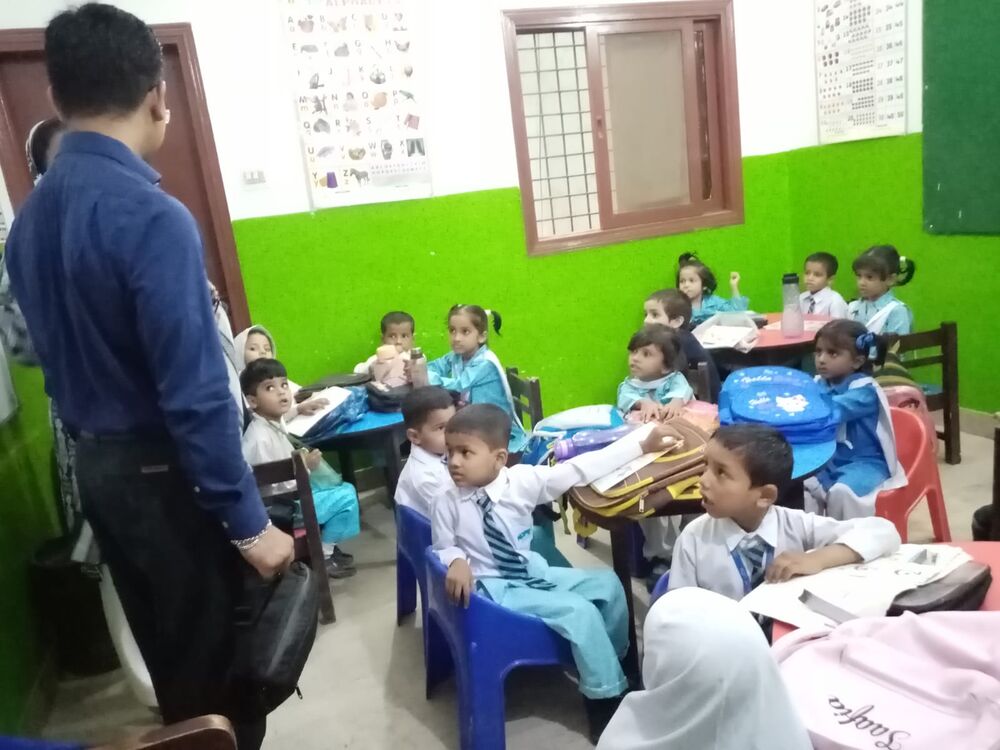
Sora Chan with young students in a Pakistani classroom Students at desks in a Pakistani classroom

Sora visiting classrooms in Karachi during the August 2023 school partnership trip.

Help us get the next module from page to classroom.

Each peer-reviewed module, each translated scale, each pilot cohort takes funding to make happen. If you believe in what we're building, the most direct way to help is to fund the next milestone.

Donate