A 501(c)(3) building the World Mental Health Curriculum

Children aren't born knowing how to handle life. We're teaching them.

We teach children the skills nobody ever taught us. Starting with a pilot in Boston, then schools in Pakistan, then every country after that. Rise to Wellness is building a free, evidence-informed mental health curriculum, validated through standardized assessments and designed to be taught in any school, anywhere in the world.
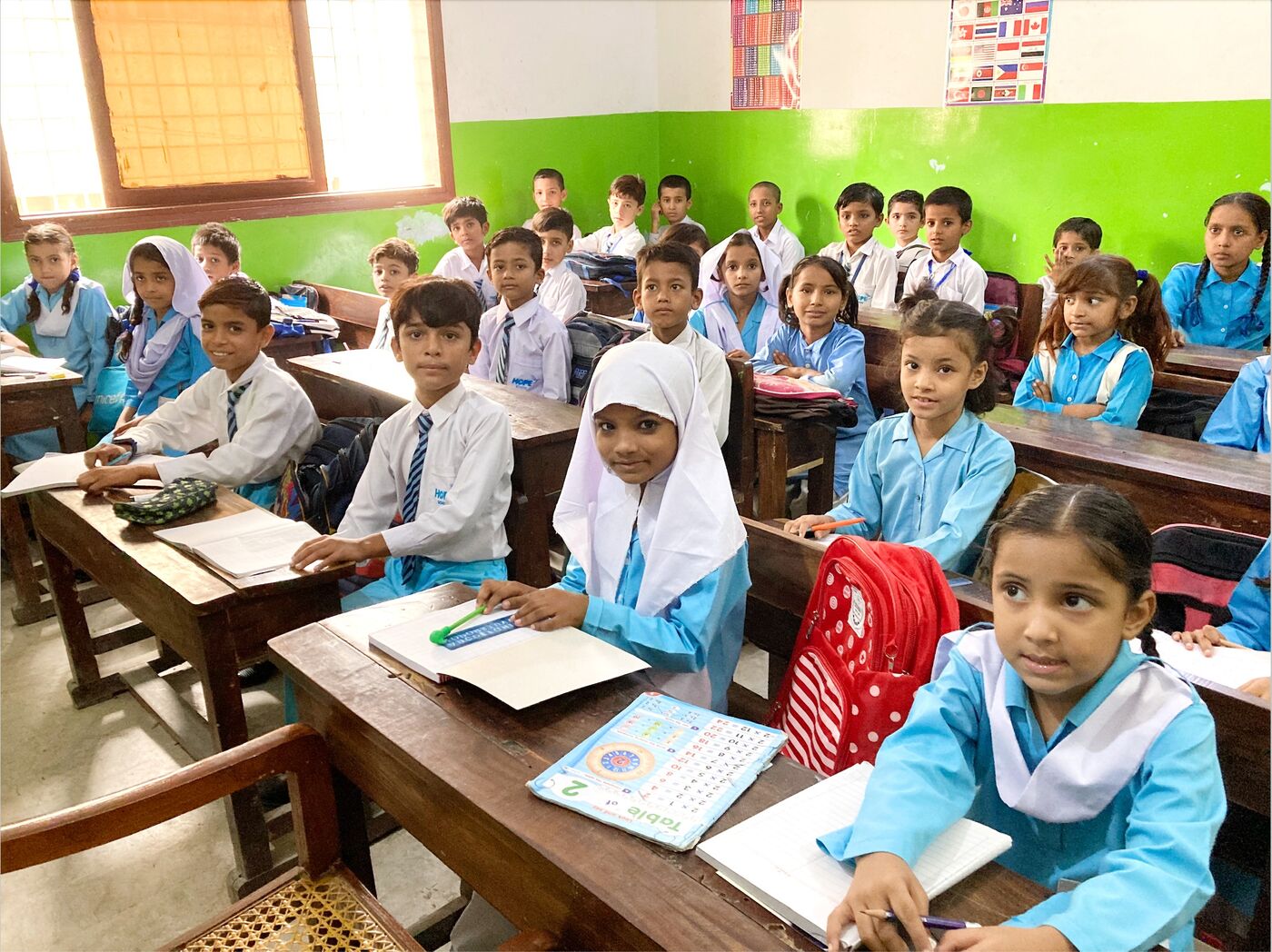
Children in a classroom at a school in Karachi, Pakistan

Students at a school in Karachi, Pakistan. Hope, an NGO running schools and hospitals across Pakistan, has agreed to implement the curriculum at their Zia Colony school once it's complete.

1 in 7
children aged 10–19 lives with a mental health disorder
WHO, 2024
~50%
of lifetime mental illness begins by age 14
NIMH
31
core skills the curriculum teaches, from emotional regulation to conflict resolution
3.5 yrs
of curriculum development, first school partner committed
The problem we're solving

Most mental health interventions arrive after the harm.

Therapy, medication, crisis lines: all essential, all reactive. We treat children once they're already struggling, then wonder why the trajectory doesn't change. The skills that protect mental health (naming an emotion, tolerating discomfort, repairing a friendship, asking for what you need) are rarely taught explicitly. So children improvise. Many improvise badly.

We believe most mental health struggles begin with one missing skill: the ability to handle life's events in an effective, healthy way. That skill can be taught.
Our approach

Six modules. Thirty-one skills. Three exposures across a child's school years.

Children don't learn to regulate emotions from a single lesson, any more than they learn to read from one. Our curriculum is delivered through worksheets, role-play, group activities, and dialogues, then reinforced over multiple years. Pre- and post-assessment with validated psychometric instruments measures actual change.

Module 01
Preparing for peer review

Controlling Your Own Emotions

Understanding and managing anger, sadness, fear, jealousy, and insecurity. Building psychological flexibility.

Module 02
Preparing for peer review

Building Relationships

Verbal and non-verbal communication, social skills, persuasion, and the foundations of healthy connection.

Module 03
Drafted

General Happiness

Appreciation, gratitude, optimistic thinking, and the daily practices that sustain wellbeing.

Module 04
In development

Getting What You Want

Assertive skills, saying no, goal-setting, and navigating disagreement without aggression.

Module 05
In development

Creating Your Identity

Values, self-acceptance, accountability, resilience, and conquering fear.

Module 06
In development

How to Be Part of a Team

Cooperation, leadership, conflict resolution, fostering community, and combating social isolation.

The method

This isn't a workshop. It's research-grade curriculum design.

Anyone can write a feel-good lesson plan. The hard part is proving it works. We're building rigor into the program from day one.

Validated psychometric assessment

Every child is pre- and post-assessed using standardized instruments (emotion regulation, social competence, resilience, anxiety, and more) administered on a precise day-by-day schedule we've already designed.

Academic peer review

Each module goes to outside reviewers, researchers in child development and clinical psychology, before it ever reaches a classroom.

Repeated exposure

Children encounter the curriculum at least three times across their school years, allowing skills to deepen rather than fade.

Free for every school and child

Schools pay nothing. Communities and parents fundraise locally to hire teachers, who are trained and employed by Rise to Wellness.

Designed for global deployment

We're partnering with Pakistani research institutions to translate and validate our assessment battery in Urdu, the first step toward a curriculum that works across languages and cultures.

Trained, employed teachers

Not volunteers. Qualified educators who are trained in our methodology and accountable for outcomes.

Where we are

The next twelve months are about moving from page to classroom.

We're past the "good idea" stage and into execution. Here's the roadmap your support accelerates.

Now
Preparing two modules for academic peer review
"Controlling Your Own Emotions" and "Building Relationships" are being finalized and will go to outside reviewers next.
Active
2026
Boston proof-of-concept weekend
Deliver completed modules through a weekend program in Boston. Collect our first pre and post outcomes data. This is our proof of concept before moving to a full cohort.
Next
Q2 2026
Urdu translation partnership
Formalize collaboration with PILL and University of Punjab to translate and validate eleven psychometric scales for Pakistani deployment.
Planned
Q3 2026
First full pilot cohort
Deliver one peer-reviewed module to a community-center cohort. Collect pre/post data. Document outcomes.
Planned
2027
Remaining four modules complete
Full six-module curriculum drafted, peer reviewed, and ready for school integration.
Planned
2028+
School integration & global expansion
Approach schools for academic-year integration, beginning with pilot sites in Pakistan and Boston.
Planned

Help us teach the generation that comes next.

A child who learns to manage their anger at nine is a different parent at thirty. Multiply that across a classroom, a school, a country. That's the compounding we're building.

Make a donation